
Prevention

UV protection for your eyes

The sun’s UV rays can harm your eyes over time and raise the risk of cataracts and growths on the eye. Sunglasses that block 100% of UV and a wide-brimmed hat help protect them.

Key points

Who’s at risk
Everyone, especially children, people who spend long hours outside, and anyone near snow, water or sand.
How often
Wear sunglasses that block 100% of UV every time you are outside in daylight, all year, even on cloudy days.
Common signs
Damage builds up quietly over years. Too much sun at once can leave eyes painful, gritty and sensitive to light.
How it’s found
Regular eye exams can spot early sun damage, such as growths on the white of the eye or early cataracts.
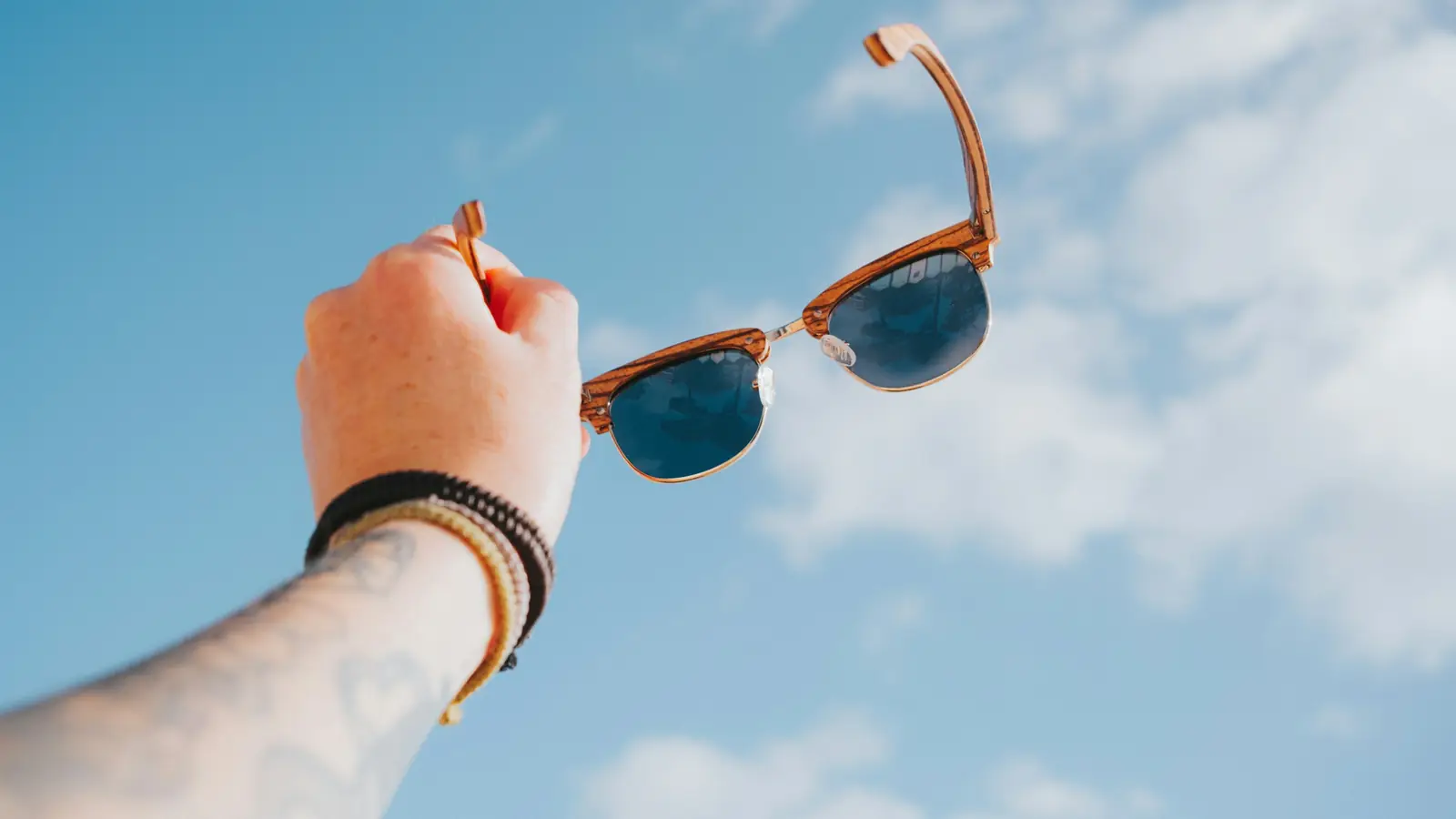
A hand holding sunglasses up against a bright blue sky

The sun gives off ultraviolet (UV) rays. You can’t see or feel them, but they can harm your eyes and the thin skin around them, just as they harm the rest of your skin.

Over many years, UV exposure adds up. It is linked to:

  • Cataracts, a clouding of the lens inside the eye
  • Growths on the white of the eye, such as a pinguecula (a yellowish bump) or a pterygium (a fleshy growth that can spread onto the clear front of the eye)
  • Skin cancer on the eyelids and, rarely, cancer inside the eye

UV may also play a part in macular degeneration, though experts are still studying this.

A lot of UV in a short time can cause a painful “sunburn” of the front of the eye, called photokeratitis. It can happen after a day on snow or water, near welding, or in a tanning bed. The pain, grittiness, tearing and light sensitivity often start hours later. It usually heals in a day or two, but it hurts and should be checked.

UV reaches you on cloudy days, in winter and in the shade. Snow, water, sand and pavement bounce it back up at your eyes. Children’s eyes let more UV through to the inside of the eye than adults’ eyes do, which is why good habits should start young.

Choose the right sunglasses

  • Look for a label that says 100% UV protection, UV400, or that the lenses block both UVA and UVB rays.
  • Darker is not always better. A dark tint without UV blocking can do more harm, because your pupils open wider behind it and let more UV in.
  • Price doesn’t tell you how much UV is blocked. Many low-cost sunglasses block 100% of UV. Check the label.
  • Larger lenses and wraparound frames block light coming in from the sides.
  • Polarized lenses cut glare from water and roads, which makes things more comfortable to look at. They block UV only if the label says so.

Add a hat

A wide-brimmed hat blocks a lot of the UV that comes from above and around your sunglasses.

Make it a habit

  • Wear sunglasses whenever you are outside in daylight, all year round, even when it is cloudy.
  • Take extra care in the middle of the day, when UV is strongest.
  • Take extra care on snow, on the water, at the beach and in the mountains.

Other ways to protect your eyes

  • Never look straight at the sun, including during an eclipse. Use only special eclipse viewers that meet safety standards. Regular sunglasses are not enough.
  • Skip tanning beds. If you do use one, wear the protective goggles.
  • If you weld, always wear a proper welding helmet or shield.
  • Some contact lenses and clear glasses lenses block UV, and lenses that darken in sunlight can too. They don’t cover the whole eye and eyelids, so still wear sunglasses outside.

  • Children and teens, who spend a lot of time outside. Choose child-size sunglasses with full UV protection and impact-resistant lenses, plus a hat.
  • People who work or play outside, such as construction workers, farmers, lifeguards, gardeners, skiers, boaters and golfers.
  • People who spend time on snow, water or sand, or at high altitude, where UV is stronger or reflects back at the eyes.
  • People who take medicines that make them more sensitive to sunlight. Some antibiotics, water pills and acne medicines can do this. Ask your pharmacist.
  • People with macular degeneration or a family history of it, or who have had a growth on the white of the eye or skin cancer near the eyes.
  • People who have had cataract surgery. Most lens implants block UV, but sunglasses still protect the eyelids and the surface of the eye.

Time for a check?

Book a check-up