Condition

Strabismus (eye turn)

Strabismus is when the eyes don’t line up, so one eye turns in, out, up or down. In children it can lead to lazy eye, and in adults it often causes double vision. Treatment can help at any age.

Key points

Common signs
An eye that turns in, out, up or down. Children may squint or tilt their head; adults may see double.
Who’s at risk
Children with a family history or strong farsightedness, and adults with diabetes, thyroid disease or a stroke.
How it’s found
An eye exam that checks alignment, eye movements, depth perception and each eye’s vision.
Treatment
Glasses, patching, prism lenses, eye exercises or eye muscle surgery, depending on the type of eye turn.
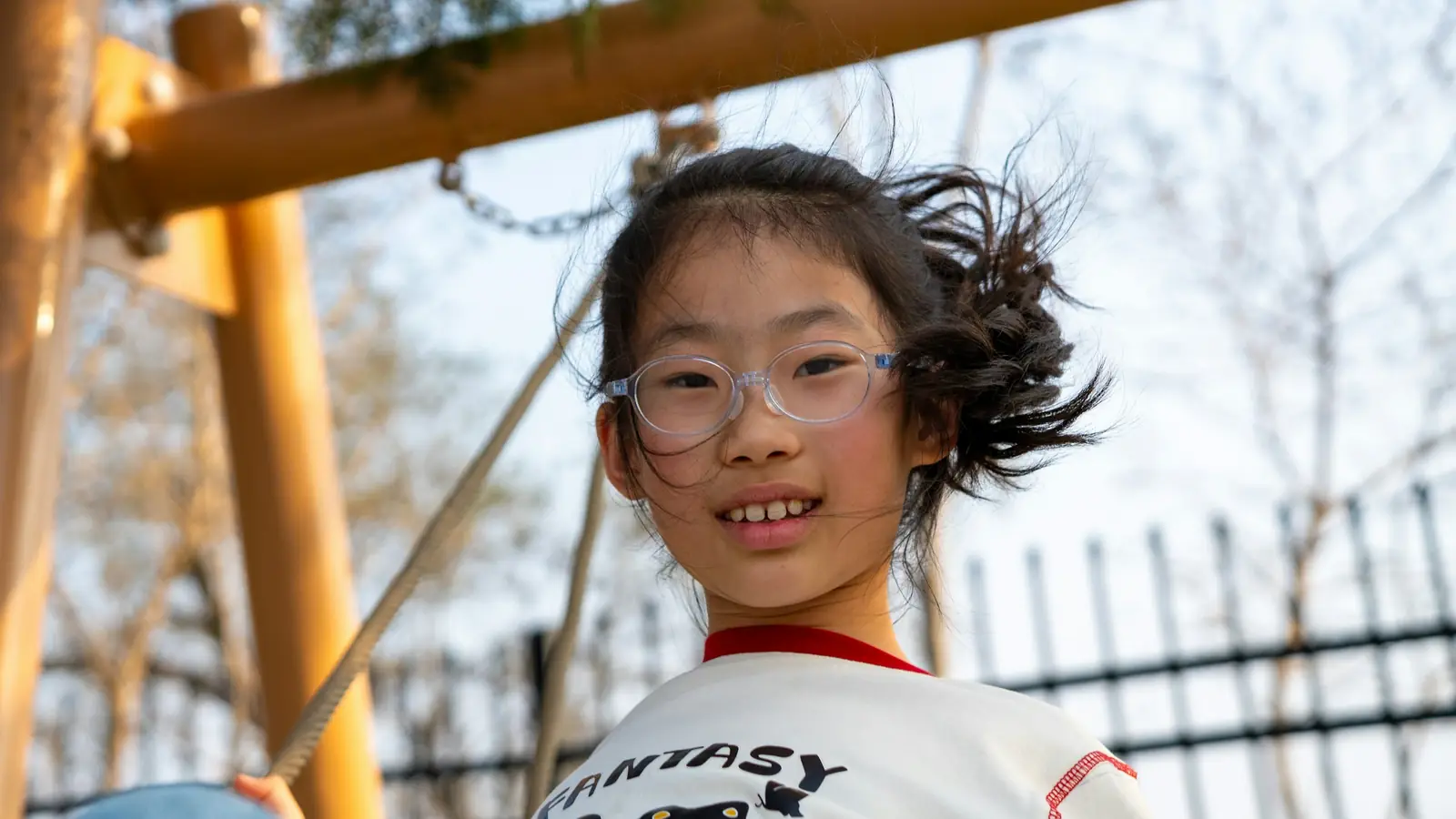
A happy girl in glasses playing outdoors on a swing

Strabismus means the eyes don’t line up with each other. While one eye looks straight at something, the other eye turns in, out, up or down. People often call it crossed eyes, a wandering eye or an eye turn.

The turn may be there all the time, or it may come and go. It may show up more when a person is tired, sick or focusing up close. It can switch from one eye to the other.

Six small muscles move each eye, and the brain controls them so both eyes point at the same spot. Strabismus happens when that teamwork doesn’t work as it should. The cause may be in the eye muscles, the nerves that control them, the brain, or a strong glasses prescription.

In children

Most strabismus starts in childhood. Some babies’ eyes wander now and then in the first few months, which is normal. An eye that turns all the time, at any age, should be checked. So should an eye turn that is still there by about four months of age, or that comes and goes after that.

Some babies only look cross-eyed because of a wide, flat nose bridge or folds of skin near the inner eye. Your eye doctor can tell whether the eyes are truly turned.

In young children, the brain may ignore the picture from the turned eye to avoid seeing double. Over time, this can lead to weaker vision in that eye (amblyopia, or lazy eye). This is why an eye turn in a child needs care early. It is not something a child will simply grow out of.

In adults

An eye turn can also start later in life. It may come from diabetes, thyroid eye disease, a stroke, a head injury, a problem with the nerves that move the eyes, or a childhood eye turn that has come back. Adults usually notice double vision, because their brain can no longer ignore the second picture.

In children, you might notice:

  • One eye that turns in, out, up or down
  • Eyes that don’t seem to look at the same thing
  • Squinting or closing one eye, especially in bright sunlight
  • Tilting or turning the head to look at things
  • Bumping into things, or trouble judging distances

Adults may notice:

  • Double vision
  • Eyes that feel tired or strained, especially when reading
  • Needing to close or cover one eye to see clearly
  • Tilting the head to make double vision go away
  • Other people saying their eyes look different