Exam

Children’s eye exams

Children rarely say they can’t see well, and a school screening can miss problems. A full eye exam checks how your child sees, focuses and uses both eyes together, and looks at eye health.

Key points

Common signs
Squinting, head tilting, covering one eye, sitting close to screens, or avoiding reading and close-up play.
How it’s found
A school screening can miss problems. A full exam checks focus, eye teamwork and eye health, even before a child can read.
Who’s at risk
Children born early, children with developmental conditions, and families with lazy eye, crossed eyes or childhood cataracts.
How often
In the first year, again between 3 and 5, before school, then regularly during the school years.
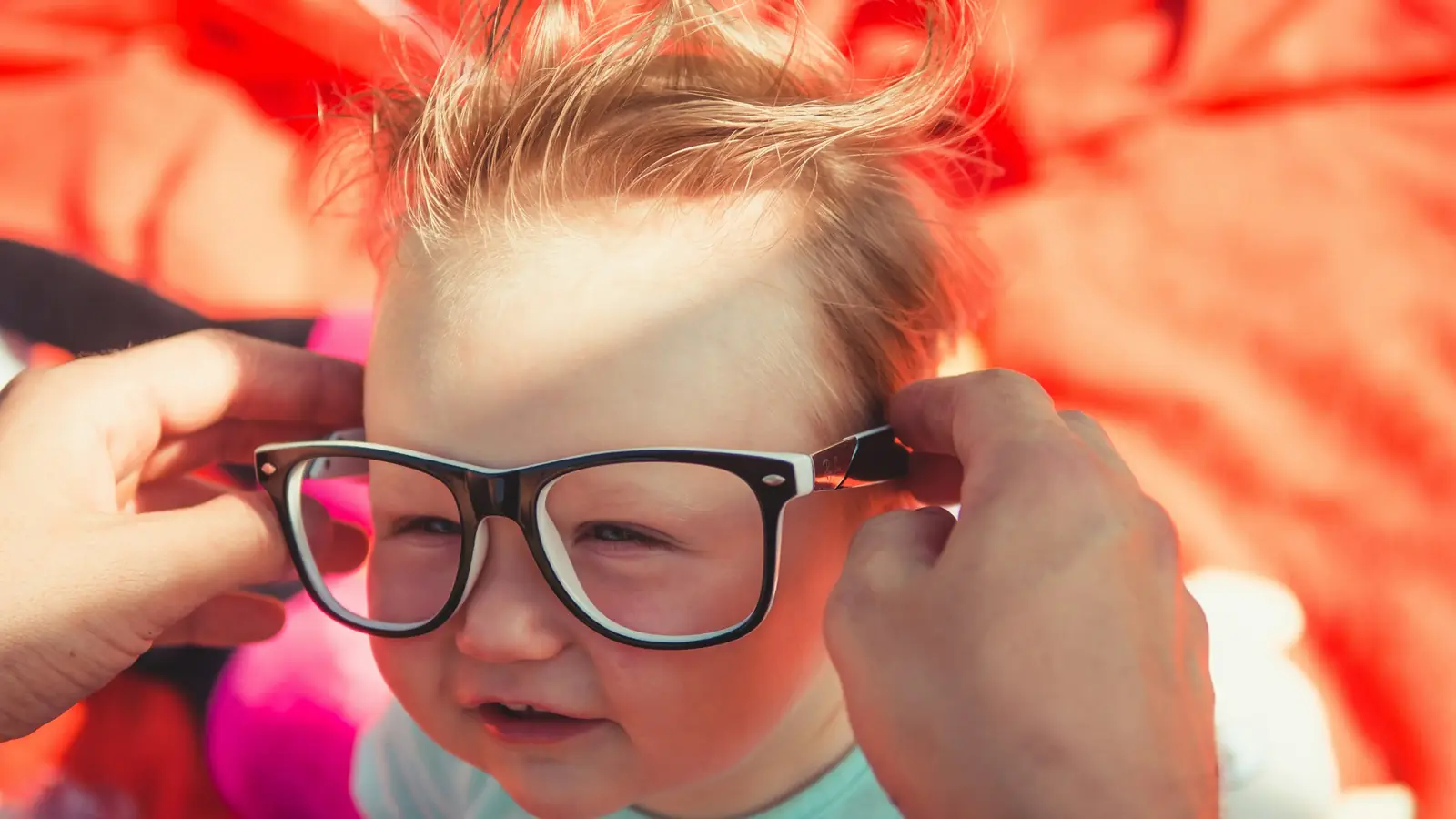
A toddler being fitted with a new pair of glasses

Children rarely say that they can’t see well. A child who has always seen the world a little blurry, or with one eye doing most of the work, thinks that is how everyone sees. So a vision problem can go unnoticed for years, even in a bright, happy child who seems to be doing fine.

Good vision matters for how a child learns, reads, plays and moves. Much of what children learn in school comes through their eyes. A child who struggles to see the board, loses their place when reading or gets headaches after homework may be labelled as not paying attention, when the real problem is their eyes.

Some childhood eye problems also need to be found early. A “lazy eye” (amblyopia) or an eye that turns in or out (strabismus) is usually easiest to treat when a child is young, while vision is still developing. Treatment can work later too, but it often takes longer.

A vision screening at school or at the pediatrician’s office is helpful, but it is not an eye exam. Screenings are quick checks that can miss focusing problems, eye teaming problems and eye health problems. A child who passes a screening can still need glasses or other care.

Signs to watch for

Tell your eye doctor if your child:

  • Squints, tilts their head or covers one eye to see
  • Sits very close to the TV or holds books close to their face
  • Rubs their eyes often or blinks a lot
  • Has an eye that turns in, out, up or down, even now and then
  • Avoids reading, coloring, puzzles or other close-up activities
  • Loses their place when reading, or uses a finger to keep track
  • Complains of headaches, tired eyes or seeing double
  • Has trouble catching a ball or with other eye-hand tasks
  • Has eyes that water a lot or seem very sensitive to light

Your eye doctor will start by asking about your child’s health, birth history, development and any eye problems in the family. Tell them what you have noticed at home and anything teachers have mentioned.

The tests are chosen to match your child’s age. Your child does not need to know their letters or be able to read. Depending on age, the exam may include:

  • Checking how clearly your child sees, using pictures, shapes or letters. For babies and toddlers, your eye doctor watches how they follow lights and toys.
  • Measuring how the eyes focus. Your eye doctor shines a light into the eyes and uses lenses to find out whether your child is nearsighted, farsighted or has astigmatism. This works even for a baby who can’t answer questions.
  • Checking eye alignment and teamwork, to see whether the eyes point in the same direction and work well together.
  • Testing depth perception and eye movements, often with games or 3D pictures.
  • Checking color vision in older children.
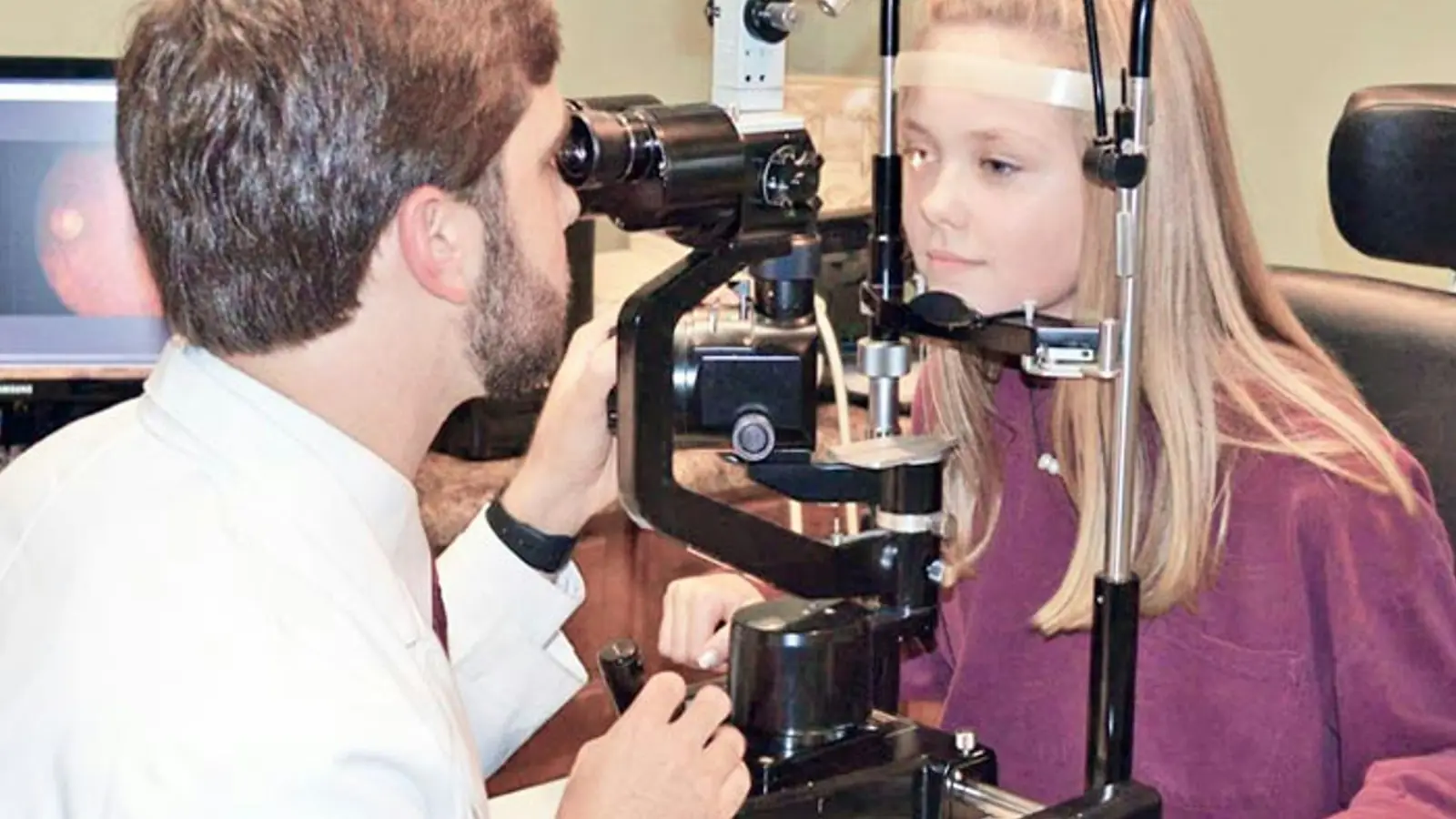
  • Looking at the health of the eyes, inside and out, with lights and lenses.

Your eye doctor will often use eye drops that widen (dilate) the pupils and relax the focusing muscles for a while. This lets them measure your child’s true prescription and see the back of the eye clearly. The drops may sting for a moment. For several hours afterward, and sometimes until the next day, your child’s vision may be blurry up close and bright light may bother them.

None of the tests hurt. At the end, your eye doctor will explain what they found and whether your child needs glasses, other treatment or another visit.